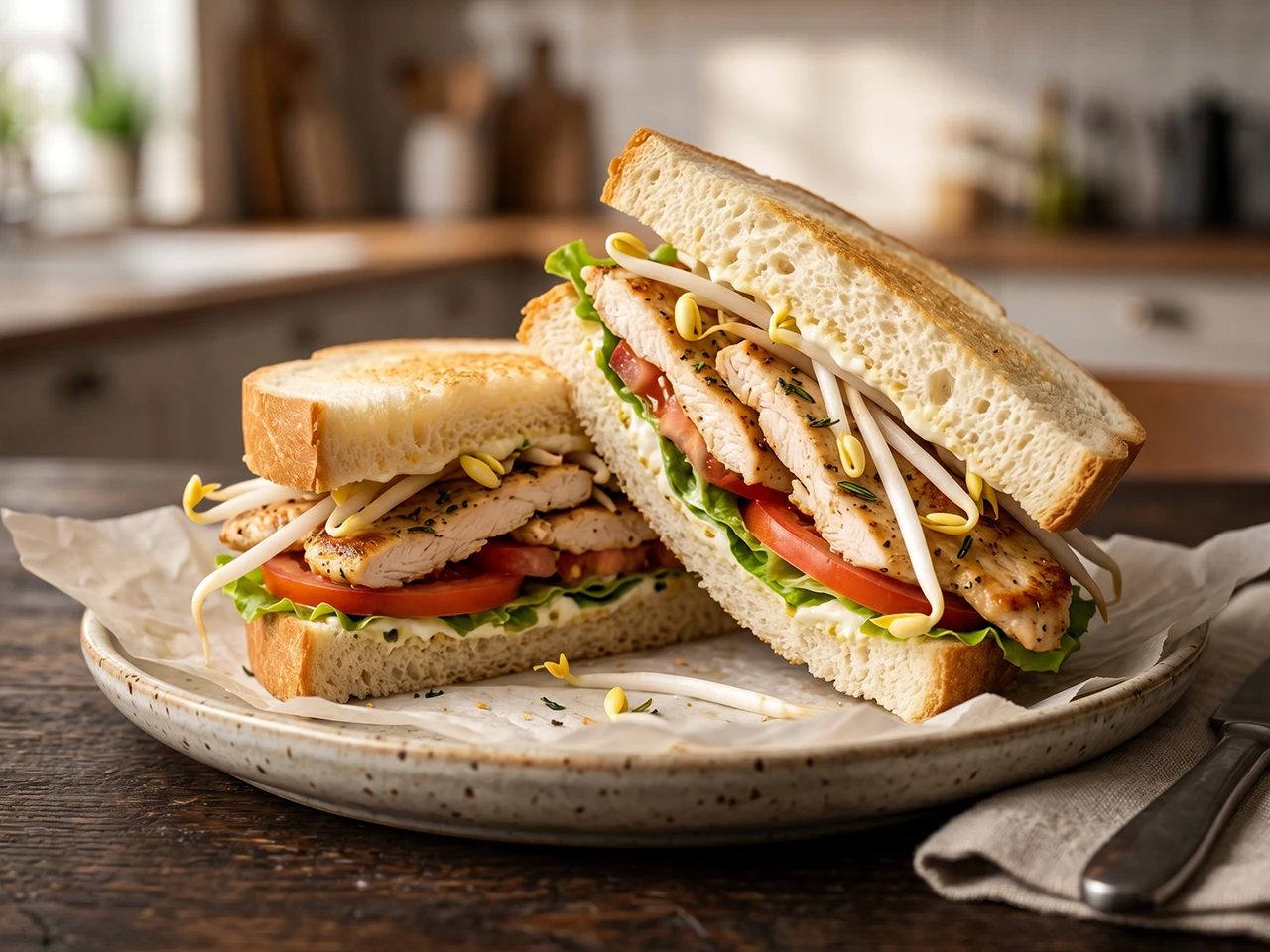
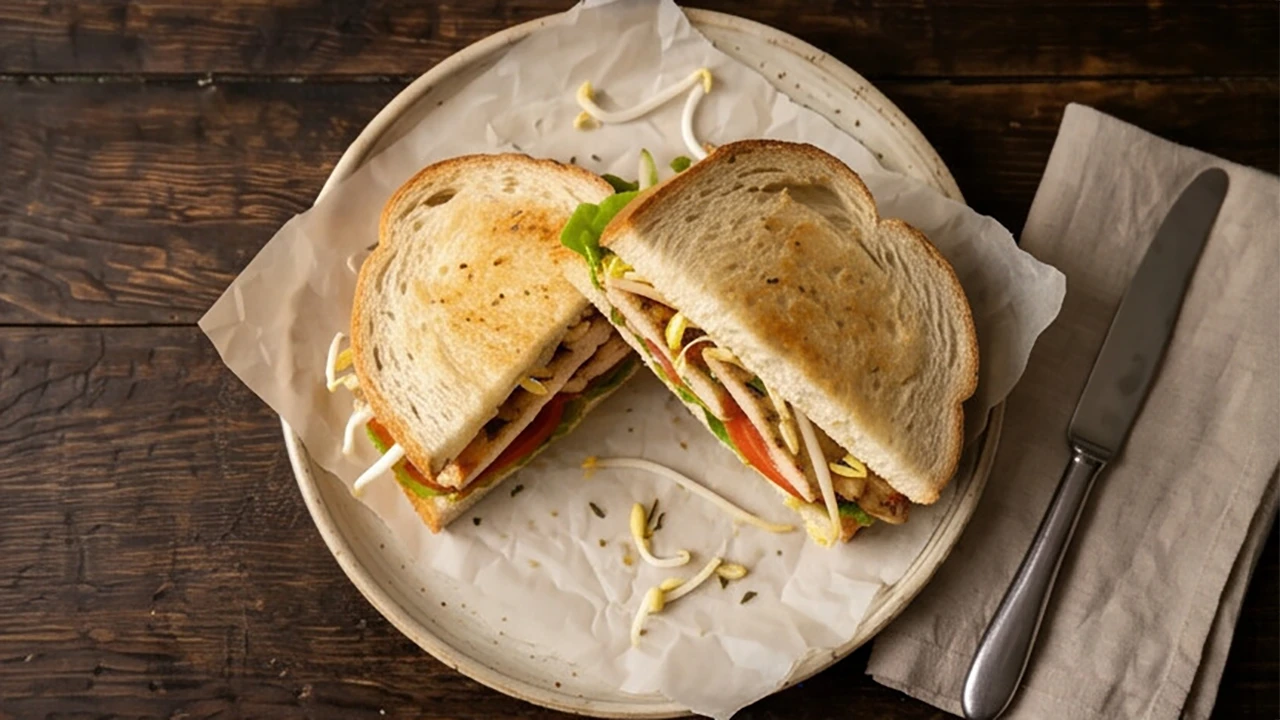
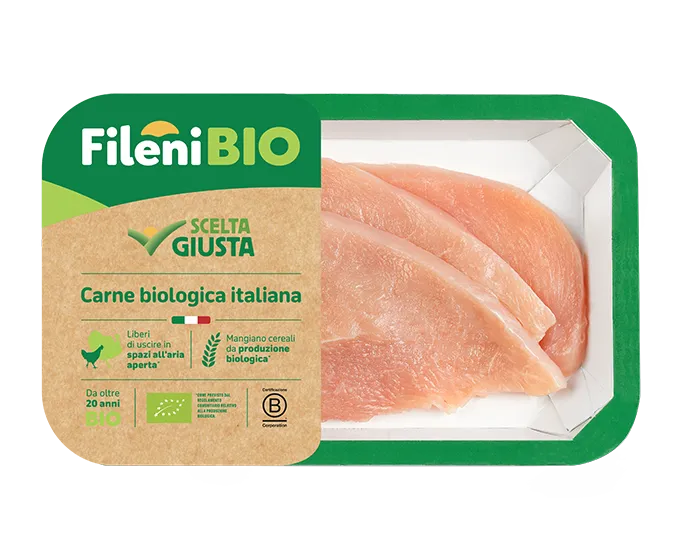
Quando le giornate si allungano e la voglia di stare all’aperto cresce, i panini farciti con pollo diventano la soluzione perfetta per un pranzo veloce, gustoso e senza rinunce. In questa ricetta firmata Fileni, il Petto di Pollo Fileni scaldato e profumato di erbe aromatiche incontra la cremosità della crescenza, la croccantezza dei germogli di soia e la freschezza di pomodoro e insalata, racchiusi tra due fette di pane morbido e leggermente tostato.
È il classico esempio di come pochi ingredienti, ben scelti e ben bilanciati, possano trasformarsi in un piatto unico capace di soddisfare grandi e piccini. Perfetti da preparare in anticipo e portare con sé in una gita fuoriporta, o da gustare comodamente a casa per un pranzo informale ma curato in ogni dettaglio.
Per preparare questi panini freschi e saporiti, occorrono i seguenti ingredienti:
8 fette di pane;
300 g di Petto di Pollo Fileni o tacchino;
100 g di crescenza;
50 g di germogli di soia;
2 pomodori;
qualche foglia di insalata;
1 cucchiaino di senape;
timo, salvia e rosmarino;
2 cucchiai di olio extravergine d’oliva;
sale e pepe q.b.;
Seguire questi step per ottenere panini freschi, equilibrati e pronti in pochi minuti.
Tagliare il Petto di Pollo Fileni a fette sottili o a striscioline regolari. Scaldare l’olio extravergine in una padella antiaderente e unire timo, salvia e rosmarino tritati finemente, lasciandoli insaporire per qualche istante. Aggiungere il pollo, salare e pepare, quindi farlo rosolare a fuoco vivace per 6-8 minuti, finché non risulta dorato e cotto in modo uniforme. Toglierlo dal fuoco e lasciarlo intiepidire.
Lavare i pomodori e tagliarli a fette sottili. Sciacquare le foglie di insalata e asciugarle delicatamente con un canovaccio pulito. Sciacquare anche i germogli di soia sotto acqua corrente, scolandoli bene per eliminare l’umidità in eccesso: questo passaggio assicura panini croccanti e non inzuppati.
In una piccola ciotola, lavorare la crescenza con il cucchiaino di senape fino a ottenere una crema morbida e omogenea, leggermente piccante. Questo passaggio aggiunge cremosità e un tocco di sapidità in più, bilanciando la delicatezza del pollo e la freschezza delle verdure.
Tostare leggermente le fette di pane, se gradito, per renderle più croccanti. Spalmare la crema di crescenza e senape su un lato di ogni fetta. Distribuire le foglie di insalata, le fette di pomodoro, il pollo rosolato e i germogli di soia, quindi chiudere con la seconda fetta di pane. Tagliare i panini a metà e servire subito, oppure avvolgerli in carta da forno per portarli con sé in gita.
La storia del panino farcito viene fatta tradizionalmente risalire al XVIII secolo in Inghilterra, quando John Montagu, IV Conte di Sandwich, chiese di poter mangiare della carne racchiusa tra due fette di pane per non interrompere una partita a carte. Da quel gesto pratico nacque un’abitudine alimentare destinata a diffondersi in tutto il mondo, evolvendosi in infinite varianti regionali.
In Italia, la tradizione del panino farcito si è intrecciata con la cultura della merenda e dello spuntino veloce, fino a diventare un vero e proprio pasto completo quando arricchito con proteine di qualità, formaggi freschi e verdure di stagione. Utilizzare il Petto di Pollo Fileni per questa preparazione significa scegliere una fonte proteica magra e genuina, capace di rendere il panino non solo pratico, ma anche nutriente ed equilibrato — ideale per accompagnare le giornate più attive, dalle gite in campagna alle pause pranzo fuori casa.
Consulta i documenti utili.
Commissione Europea. (2012). Regolamento (UE) n. 432/2012 della Commissione del 16 maggio 2012 relativo alla compilazione di un elenco di indicazioni sulla salute consentite sui prodotti alimentari, diverse da quelle facenti riferimento alla riduzione dei rischi di malattia e allo sviluppo e alla salute dei bambini. Gazzetta ufficiale dell’Unione europea, L 136. Recuperato da https://eur-lex.europa.eu
CREA. Tabelle di composizione degli alimenti, Aggiornamento 2019- Website a cura di L. Marletta e E. Camilli (AlimentiNUTrizione – Tabelle Composizione Alimenti)
CREA – Centro di ricerca Alimenti e Nutrizione. (2018). Linee guida per una sana alimentazione (Revisione 2018).
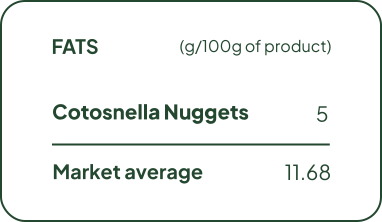
The average fat content is calculated based on the sum of products representing 70% of the market value sales of breaded snack products (Source: Nielsen, AT October 2024; Scope: Hypermarkets + Supermarkets + Self-service stores). The reference value for the market average was obtained by considering all products belonging to the breaded snacks market, which account for 70% of the total and include the following brands:
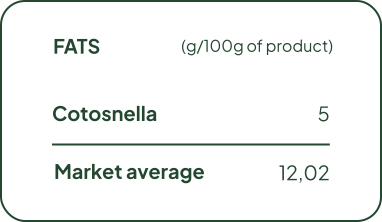
The average fat content is calculated based on the sum of products representing 70% of the market value sales of spinach cutlets (Source: Nielsen, AT October 2024; Scope: Hypermarkets + Supermarkets + Self-service stores). The reference value for the market average was obtained by considering all products belonging to the spinach cutlets market, which account for 70% of the total and include the following brands:
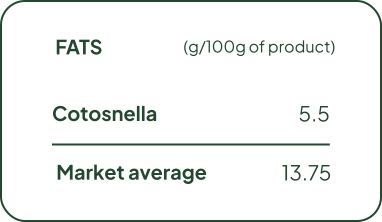
50% less fat compared to the average of the classic breaded cutlets market. The average fat content is calculated based on the sum of products representing 70% of the market value sales of classic breaded cutlets (Source: Nielsen, AT October 2024; Scope: Hypermarkets + Supermarkets + Self-service stores). The reference value for the market average was obtained by considering all products belonging to the classic breaded cutlets market, which account for 70% of the total and include the following brands:
In Cingoli and Castelplanio, in the Marche region, are located the Fileni plants - IFS, UNI EN ISO 9001:2015 and UNI EN ISO 14001:2015 certified - where product processing takes place. Every day, in compliance with legal standards, structures and machinery are inspected and sanitised to ensure they are always efficient. In addition, the processing of products from the organic supply chain takes place on days and at times strictly established to avoid any kind of contamination.
You can trust the quality of our organic products because we thoroughly check them before they leave the farm. We monitor and test every step of the organic supply chain. We even check the soil on which we grow our feed for traces of pesticides and other impermissible substances. We do this to ensure the best quality and because it is what we believe in.
Fileni's organic farms are surrounded by greenery. To prevent them from abruptly breaking up the natural landscape around them, we have surrounded the sheds with plants and trees, among which the animals are free to roam, choosing when to live outdoors and when to shelter from the sun or the weather inside the structures.
These are equipped with the latest technology, so that they can reduce dust and odours without affecting the everyday life of the neighbouring population. In many cases, they are also able to produce electricity in a clean and efficient manner thanks to the use of photovoltaic panels.
Wheat, maize, soya, field beans and protein peas are the raw materials that make up the organic feed produced in our feed mill in Jesi, in the province of Ancona. A mix of legumes and cereals, organically grown, form the basis of a healthy, balanced diet for all chickens and turkeys in our organic supply chain.
But our commitment to agriculture goes further, in the belief that every virtuous action pays off. This is why we are participating on an experimental basis - as co-founders - in the ARCA project (Agricoltura per la Rigenerazione Controllata dell'Ambiente - Agriculture for the Controlled Regeneration of the Environment), conceived by Bruno Garbini with Giovanni Fileni and Enrico Loccioni, which is concerned with implementing regenerative farming techniques to preserve cultivated land, maintaining its fertility and protecting it from hydrogeological instability.
For the embryo to develop properly, we make sure to cuddle the newly laid eggs. We keep them warm, in the hatchery, for 21 days, three of which in the hatching chamber, constantly monitoring temperature and humidity.
“Well begun is half done,” as the saying goes. The first step, common to all supply chains, is of fundamental importance. We let nature guide the animals’ instincts. We do not force anything; we simply ensure they are provided with the ideal environment for reproduction, maintaining constant levels of temperature, humidity, and hygiene.
I nostri bovini e suini nascono e vengono allevati biologicamente in Italia. Crescono liberi, seguendo il loro bioritmo naturale e un’alimentazione biologica con mangimi selezionati e formulati per offrire loro una dieta bilanciata, libera da OGM e sostanze chimiche non ammesse.
Ogni azione virtuosa ritorna. È il principio alla base della nostra visione circolare dell’intera filiera.
È per questo che partecipiamo al progetto ARCA (Agricoltura per la Rigenerazione Controllata dell’Ambiente), ideato da Bruno Garbini con Giovanni Fileni ed Enrico Loccioni, che si preoccupa di mettere in atto tecniche di agricoltura rigenerativa che consentono di preservare il terreno coltivato, mantenendone la fertilità e proteggendolo dal dissesto idrogeologico.
Operiamo ogni giorno per costruire filiere di eccellenza, diffondere buone pratiche sulla concimazione organica, la conservazione della biodiversità e per garantire al consumatore un prodotto sano e sostenibile.
The facilities dedicated to processing poultry products, located in Cingoli and Castelplanio (in the Marche region) and certified IFS, UNI EN ISO 9001:2015 and UNI EN ISO 14001:2015, are inspected daily according to a control plan to ensure compliance with legal standards.
Equipment and machinery undergo frequent cleaning and sanitization processes to guarantee maximum efficiency at all times.
No product from our conventional poultry supply chain leaves the company unless we are absolutely certain of its quality!
This assurance comes from the laboratory tests we regularly carry out at every stage of the supply chain: from the soil, to the finished feed, all the way to the nutritional value our products provide in your diet.
The level of quality we demand requires extreme precision, fostering the creation of high standards and driving the entire sector to continuously improve—for shared well-being.
Once laid, the eggs are kept in the hatchery for 21 days, including 3 days in the hatching chamber. In this phase as well, the balance between hygiene, temperature, and humidity is essential to ensure proper embryo development.
Fileni’s conventional farms are mainly located in Central Italy, in the regions of Marche, Veneto, Emilia-Romagna, and Puglia.
Chickens are reared on the ground in state-of-the-art facilities equipped with systems to reduce odors and dust, ensuring no disturbance to nearby communities. Many of our company-owned farms are also equipped with photovoltaic panels for electricity generation.
Feeding the animals in our conventional supply chain properly is the most important thing we can do for their health—and yours.
We ensure they follow a correct and balanced diet made up of cereals, legumes, minerals, and other nutrients. To achieve this, we work with veterinarians who define the variety and proportions, and we produce the feed directly in our own feed mills to ensure they receive only the very best.
Without the breeding sector, our conventional supply chain could not exist. Here, animals are able to reproduce following their natural instinct. For this reason, we devote the utmost attention to these environments, maintaining constant levels of temperature, humidity, and hygiene at all times.
Stay up to date with the latest news from Fileni.