Home » Recipes » Alette di pollo con salsa barbecue e miele

Alette di pollo con salsa barbecue e miele

Lo snack perfetto per le tue serate in compagnia

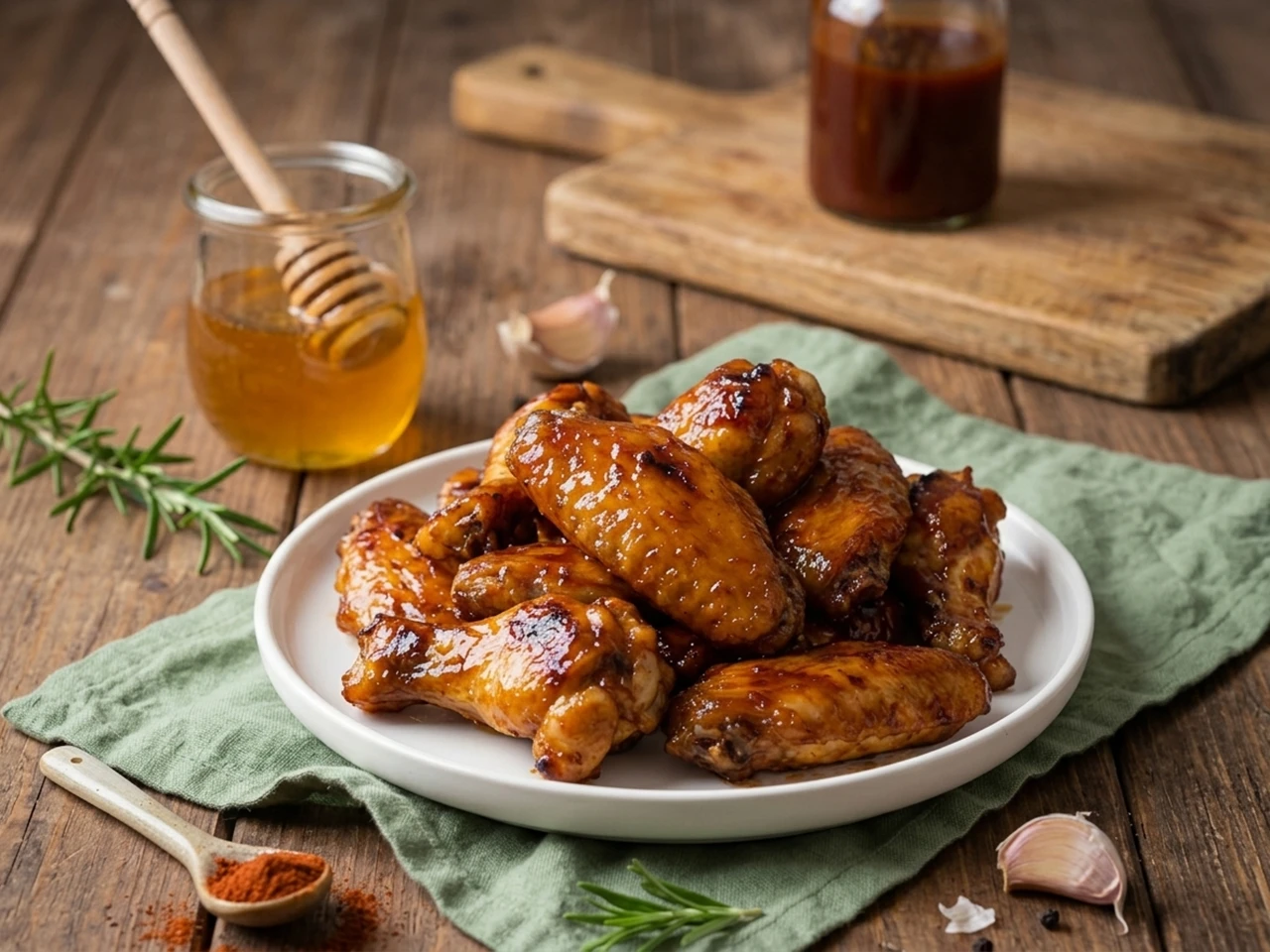
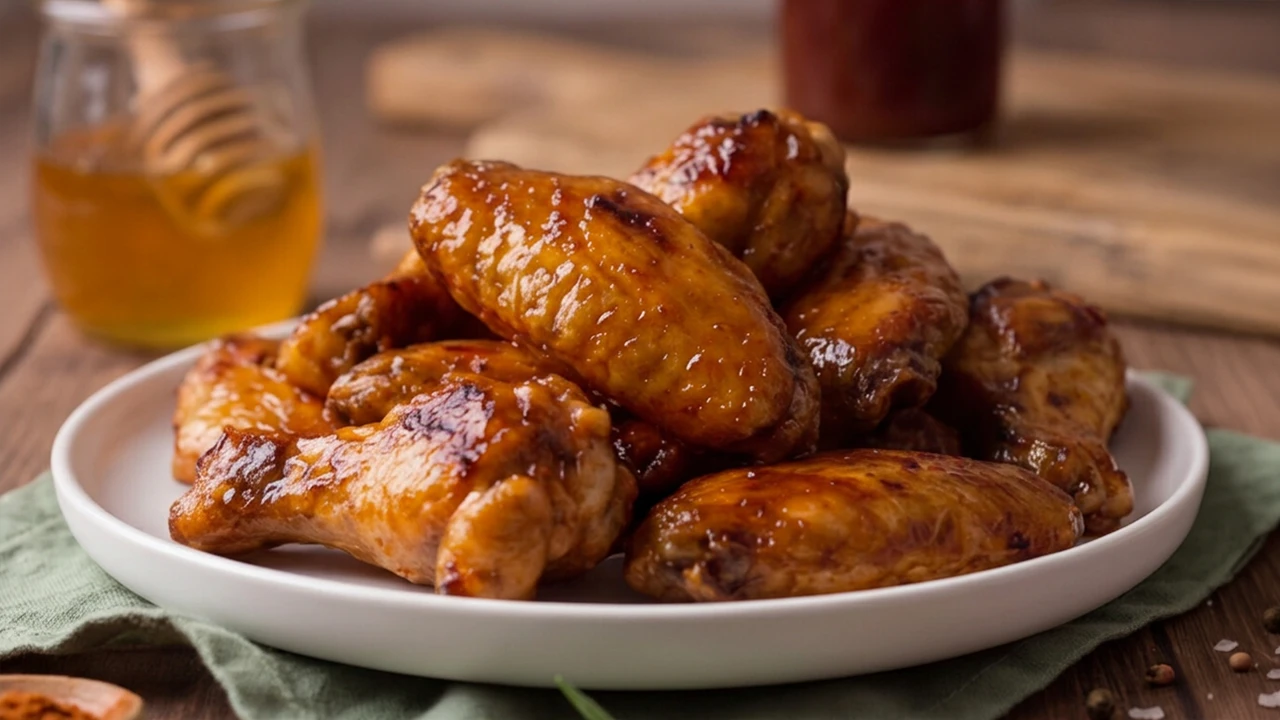
Se esiste un piatto capace di mettere d’accordo tutti durante una serata tra amici o davanti a una partita, sono senza dubbio le alette di pollo. In questa versione firmata Fileni, la carne tenera e succosa delle alette incontra una glassatura irresistibile a base di salsa barbecue e miele, che regala un equilibrio perfetto tra l’affumicato e il dolce. 

Preparare delle alette di pollo degne dei migliori diner americani è più semplice di quanto sembri: il segreto sta nella doppia cottura e nel bilanciamento della salsa, che deve avvolgere la carne creando una crosticina lucida e leggermente appiccicosa (sticky). Utilizzando le Ali di Pollo Fileni, avrete la certezza di un prodotto 100% italiano, ideale per assorbire ogni sfumatura aromatica di questa marinatura speciale. 

Ingredienti per 4 persone

Per realizzare queste alette caramellate e saporite, procurarsi i seguenti ingredienti: 

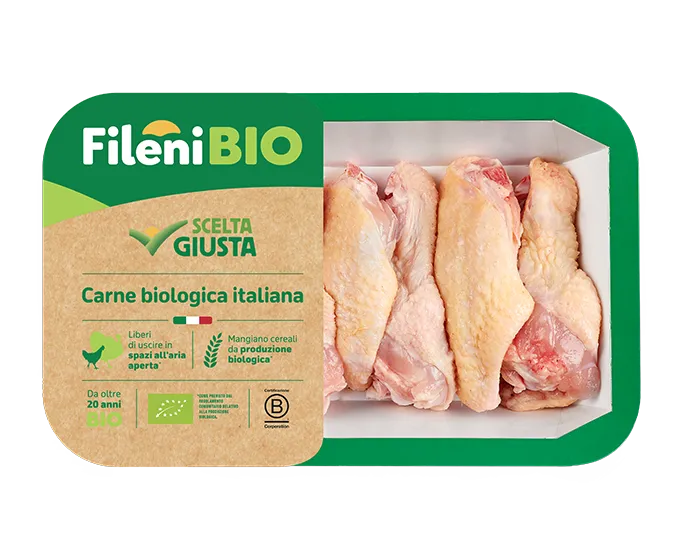
  • 800 g di Ali di Pollo Fileni Bio; 
  • 4 cucchiai di salsa barbecue; 
  • 2 cucchiai di miele di acacia o millefiori; 
  • 2 cucchiai di olio extravergine d’oliva; 
  • 1 cucchiaino di paprika dolce (o affumicata); 
  • 1 spicchio d’aglio; 
  • qualche rametto di rosmarino fresco; 
  • sale fino q.b.; 
  • pepe nero macinato fresco q.b. 
Tempo di preparazione
45 minuti
Difficoltà
Facile
Dosi per
4 persone

Come preparare le alette di pollo con salsa barbecue e miele 

Step 1
 Preparazione e marinatura 

In una ciotola capiente, preparare la glassa mescolando la salsa barbecue, il miele, l’olio extravergine, la paprika e l’aglio precedentemente tritato o schiacciato.

Step 2
Insaporire la carne

Unire le alette di pollo alla salsa e mescolare energicamente con le mani o con un cucchiaio, assicurandosi che ogni pezzo sia completamente ricoperto dal condimento. Aggiungere il rosmarino, sale e pepe. Se il tempo lo permette, lasciare marinare in frigorifero per almeno 30 minuti. 

Step 3
La cottura 

Disporre le alette su una teglia foderata con carta forno, avendo cura di non sovrapporle. Spennellare con la salsa rimasta nella ciotola. Infornare in forno preriscaldato a 200°C per circa 25-30 minuti. 

Step 4
La finitura croccante 

A metà cottura, girare le alette per garantire una doratura uniforme. Negli ultimi 5 minuti, azionare la funzione grill per permettere al miele e alla salsa barbecue di caramellare correttamente, creando la tipica crosticina lucida. Servire le alette ben calde, accompagnandole con salse a piacere. 

Dall’America con sapore: la storia delle alette più famose al mondo 

Le alette di pollo, oggi simbolo globale del finger food, hanno una storia relativamente recente ma affascinante. La loro popolarità esplose negli anni ’60 a Buffalo, nello stato di New York, dove si dice siano nate per l’intuizione di una ristoratrice che decise di friggere e glassare una parte del pollo solitamente destinata al brodo. 

Tuttavia, l’aggiunta della salsa barbecue e del miele ci porta dritti nel cuore del Sud degli Stati Uniti. La tecnica della cottura lenta con salse agrodolci affonda le radici nelle tradizioni coloniali, dove il miele veniva usato non solo come dolcificante, ma anche per bilanciare le spezie piccanti e aiutare la conservazione. Oggi, questa combinazione è diventata un pilastro della cucina BBQ, trasformando un taglio semplice in un’esperienza gastronomica gourmet. 
FAQ: consigli dello Chef e varianti

Certamente, puoi prepararle in una padella antiaderente capiente con un goccio d’olio. Fai solo attenzione a una cosa: contenendo miele e salsa barbecue, rischiano di bruciare molto facilmente a fiamma alta. Il metodo migliore è iniziare la cottura a fuoco medio-basso, aggiungendo un po’ d’acqua e mettendo il coperchio, così da cuocerle prima al vapore. Verso la fine, ti basterà togliere il coperchio e alzare la fiamma per farle rosolare e caramellare perfettamente all’esterno.
Il miele di acacia è ideale perché è fluido e ha un sapore delicato che non copre quello della salsa BBQ. Se si desidera un aroma più intenso, si può optare per il miele di castagno, che ha una nota leggermente amarognola.
Per chi ama i sapori forti, basta aggiungere alla marinatura iniziale mezzo cucchiaino di peperoncino in polvere o qualche goccia di salsa Tabasco.

Consigli per la conservazione

Le alette di pollo con salsa BBQ e miele danno il meglio di sé appena sfornate, quando la pelle è croccante e la salsa è ancora calda. Se dovessero avanzare, è possibile conservarle in frigorifero per un massimo di 1-2 giorni all’interno di un contenitore ermetico. Come riscaldarle: per evitare che perdano la loro consistenza, si sconsiglia il microonde. Il metodo migliore è riscaldarle nel forno statico a 180°C o in friggitrice ad aria per 5 minuti, così da ravvivare la croccantezza della glassa.

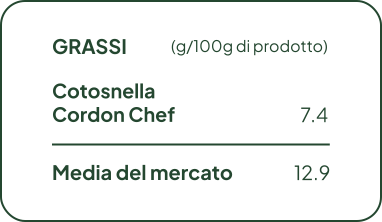
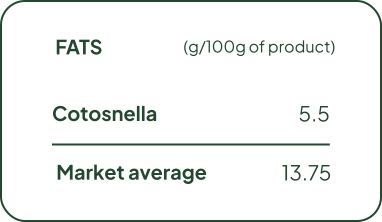
Comparative information:

La media dei grassi è calcolata sulla somma dei prodotti che rappresentano il 52% delle vendite a valore del mercato dei cordon bleu. Il valore di riferimento della media del mercato è stato ottenuto considerando tutti i prodotti appartenenti al mercato dei cordon bleu panati, che costituiscono il 52% dello stesso e comprendono i seguenti marchi:
  • AlA [cordon bleu classico (3), cordon bleu speck & formaggio (1)]
  • AMADORI [cordon bleu classico (2), cordon bleu prosciutto di Praga e mozzarella (1), Jambleu
  • FILENI [cordon chef (1)]
  • MARTINI [cordon bleu classico (6)]
  • DEL CAMPO [cordon bleu classico (2)]
 

Origine dei dati:

Commissione Europea. (2012). Regolamento (UE) n. 432/2012 della Commissione del 16 maggio 2012 relativo alla compilazione di un elenco di indicazioni sulla salute consentite sui prodotti alimentari, diverse da quelle facenti riferimento alla riduzione dei rischi di malattia e allo sviluppo e alla salute dei bambini. Gazzetta ufficiale dell’Unione europea, L 136. Recuperato da https://eur-lex.europa.eu

CREA. Tabelle di composizione degli alimenti, Aggiornamento 2019- Website a cura di L. Marletta e E. Camilli (AlimentiNUTrizione – Tabelle Composizione Alimenti)

CREACentro di ricerca Alimenti e Nutrizione. (2018). Linee guida per una sana alimentazione (Revisione 2018).

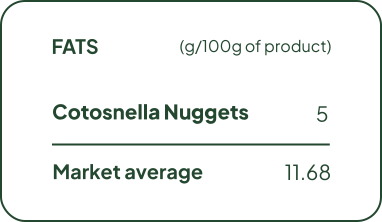
Comparative information:

The average fat content is calculated based on the sum of products representing 70% of the market value sales of breaded snack products (Source: Nielsen, AT October 2024; Scope: Hypermarkets + Supermarkets + Self-service stores). The reference value for the market average was obtained by considering all products belonging to the breaded snacks market, which account for 70% of the total and include the following brands:

  • AIA [chicken bites (2), nuggets (2), spinach patties “Spinacine Party”];
  • AMADORI [classic Birbe (2), Birbe Pops (2), Birbe Rings, Birbe Spinach, Birbe Speck & Emmental];
  • FILENI [nuggets, croquettes (2), Pepitos];
  • MARTINI [sticks (2), bites (2), croquettes, cheese croquettes (3), “Aquiloni”, “Ricci”];
  • DEL CAMPO [“Cricche”, bites].
 

Comparative information:

The average fat content is calculated based on the sum of products representing 70% of the market value sales of spinach cutlets (Source: Nielsen, AT October 2024; Scope: Hypermarkets + Supermarkets + Self-service stores). The reference value for the market average was obtained by considering all products belonging to the spinach cutlets market, which account for 70% of the total and include the following brands:

  • AIA [original Spinacine (2), extra-crispy Spinacine, Spinacine mozzarella];
  • AMADORI [Ortaiola (3)];
  • FILENI [spinach cutlets];
  • MARTINI [spinach cutlets (2)];
  • DEL CAMPO [Spinacette (2)].
 

Comparative information:

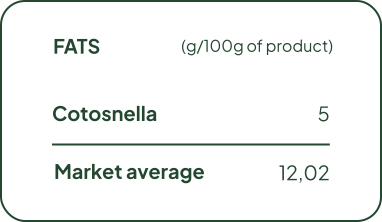
50% less fat compared to the average of the classic breaded cutlets market. The average fat content is calculated based on the sum of products representing 70% of the market value sales of classic breaded cutlets (Source: Nielsen, AT October 2024; Scope: Hypermarkets + Supermarkets + Self-service stores). The reference value for the market average was obtained by considering all products belonging to the classic breaded cutlets market, which account for 70% of the total and include the following brands: 

  • AIA [Viennese, Milanese, extra-thin (2), Bigger, classic cutlets (2), fillets];
  • AMADORI [thin cutlet, Gran Burger, classic cutlets (3), crispy cutlet];
  • FILENI [classic cutlets, Cotosnella, Suprema, breaded fillets];
  • MARTINI [classic cutlets (3)];
  • DEL CAMPO [classic cutlets].

We pay attention to detail.

In Cingoli and Castelplanio, in the Marche region, are located the Fileni plants - IFS, UNI EN ISO 9001:2015 and UNI EN ISO 14001:2015 certified - where product processing takes place. Every day, in compliance with legal standards, structures and machinery are inspected and sanitised to ensure they are always efficient. In addition, the processing of products from the organic supply chain takes place on days and at times strictly established to avoid any kind of contamination.

We are committed to ensuring the very best for you.

You can trust the quality of our organic products because we thoroughly check them before they leave the farm. We monitor and test every step of the organic supply chain. We even check the soil on which we grow our feed for traces of pesticides and other impermissible substances. We do this to ensure the best quality and because it is what we believe in.

Growing in the green.

Fileni's organic farms are surrounded by greenery. To prevent them from abruptly breaking up the natural landscape around them, we have surrounded the sheds with plants and trees, among which the animals are free to roam, choosing when to live outdoors and when to shelter from the sun or the weather inside the structures.

These are equipped with the latest technology, so that they can reduce dust and odours without affecting the everyday life of the neighbouring population. In many cases, they are also able to produce electricity in a clean and efficient manner thanks to the use of photovoltaic panels.

From field to feeder.

Wheat, maize, soya, field beans and protein peas are the raw materials that make up the organic feed produced in our feed mill in Jesi, in the province of Ancona. A mix of legumes and cereals, organically grown, form the basis of a healthy, balanced diet for all chickens and turkeys in our organic supply chain.

But our commitment to agriculture goes further, in the belief that every virtuous action pays off. This is why we are participating on an experimental basis - as co-founders - in the ARCA project (Agricoltura per la Rigenerazione Controllata dell'Ambiente - Agriculture for the Controlled Regeneration of the Environment), conceived by Bruno Garbini with Giovanni Fileni and Enrico Loccioni, which is concerned with implementing regenerative farming techniques to preserve cultivated land, maintaining its fertility and protecting it from hydrogeological instability.

The first step into the Fileni world.

For the embryo to develop properly, we make sure to cuddle the newly laid eggs. We keep them warm, in the hatchery, for 21 days, three of which in the hatching chamber, constantly monitoring temperature and humidity.

Nature takes care of it.

“Well begun is half done,” as the saying goes. The first step, common to all supply chains, is of fundamental importance. We let nature guide the animals’ instincts. We do not force anything; we simply ensure they are provided with the ideal environment for reproduction, maintaining constant levels of temperature, humidity, and hygiene.

Filtra

Temi principali

Liberi di pascolare.

I nostri bovini e suini nascono e vengono allevati biologicamente in Italia. Crescono liberi, seguendo il loro bioritmo naturale e un’alimentazione biologica con mangimi selezionati e formulati per offrire loro una dieta bilanciata, libera da OGM e sostanze chimiche non ammesse. 

Rigeneriamo la terra.

Ogni azione virtuosa ritorna. È il principio alla base della nostra visione circolare dell’intera filiera.

È per questo che partecipiamo al progetto ARCA (Agricoltura per la Rigenerazione Controllata dell’Ambiente), ideato da Bruno Garbini con Giovanni Fileni ed Enrico Loccioni, che si preoccupa di mettere in atto tecniche di agricoltura rigenerativa che consentono di preservare il terreno coltivato, mantenendone la fertilità e proteggendolo dal dissesto idrogeologico.
Operiamo ogni giorno per costruire filiere di eccellenza, diffondere buone pratiche sulla concimazione organica, la conservazione della biodiversità e per garantire al consumatore un prodotto sano e sostenibile. 

Processing facilities.

The facilities dedicated to processing poultry products, located in Cingoli and Castelplanio (in the Marche region) and certified IFS, UNI EN ISO 9001:2015 and UNI EN ISO 14001:2015, are inspected daily according to a control plan to ensure compliance with legal standards.

Equipment and machinery undergo frequent cleaning and sanitization processes to guarantee maximum efficiency at all times.

Trust in our commitment.

No product from our conventional poultry supply chain leaves the company unless we are absolutely certain of its quality!

This assurance comes from the laboratory tests we regularly carry out at every stage of the supply chain: from the soil, to the finished feed, all the way to the nutritional value our products provide in your diet.

The level of quality we demand requires extreme precision, fostering the creation of high standards and driving the entire sector to continuously improve—for shared well-being.

Out of the shell.

Once laid, the eggs are kept in the hatchery for 21 days, including 3 days in the hatching chamber. In this phase as well, the balance between hygiene, temperature, and humidity is essential to ensure proper embryo development.

Technology for better growth.

Fileni’s conventional farms are mainly located in Central Italy, in the regions of Marche, Veneto, Emilia-Romagna, and Puglia.

Chickens are reared on the ground in state-of-the-art facilities equipped with systems to reduce odors and dust, ensuring no disturbance to nearby communities. Many of our company-owned farms are also equipped with photovoltaic panels for electricity generation.

Good, wholesome feed.

Feeding the animals in our conventional supply chain properly is the most important thing we can do for their health—and yours.

We ensure they follow a correct and balanced diet made up of cereals, legumes, minerals, and other nutrients. To achieve this, we work with veterinarians who define the variety and proportions, and we produce the feed directly in our own feed mills to ensure they receive only the very best.

A matter of instinct.

Without the breeding sector, our conventional supply chain could not exist. Here, animals are able to reproduce following their natural instinct. For this reason, we devote the utmost attention to these environments, maintaining constant levels of temperature, humidity, and hygiene at all times.

Subscribe to our newsletter

Stay up to date with the latest news from Fileni.